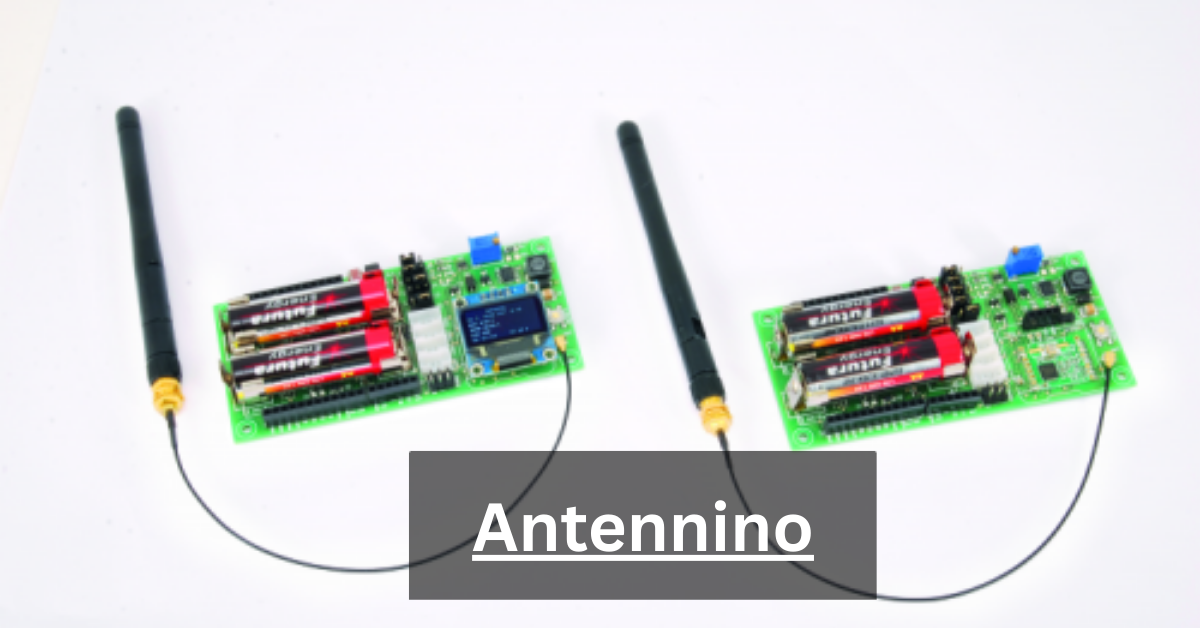
Antennino is an Arduino-compatible microcontroller board designed to enable low-power IoT projects with a focus on wireless communication. The name combines “antenna” and “Arduino,” reflecting its primary purpose: seamless integration of sub-GHz radio modules with the flexible and familiar Arduino ecosystem. With built-in support for RFM69 transceivers and LoRa long-range communication, Antennino is becoming a go-to choice for makers, developers, and educators seeking reliable wireless IoT solutions.
The concept behind Antennino originated from the need for a compact, low-energy, and easy-to-use IoT board that could communicate over long distances without relying on Wi-Fi or Bluetooth. The name “Antennino” cleverly fuses “antenna,” emphasizing wireless connectivity, with “Arduino,” highlighting compatibility with one of the most widely used microcontroller ecosystems in the maker community. This branding not only communicates its function but also its versatility and accessibility.
As IoT ecosystems expand, there is a growing demand for low-power embedded devices capable of transmitting data across sub-GHz frequency bands. Antennino stands out as a solution because it balances ease of programming, long-range communication, and low power consumption. Whether for home automation, environmental monitoring, or smart agriculture, Antennino allows developers to focus on building innovative applications rather than struggling with hardware compatibility.
While Arduino boards are highly popular for prototyping, Antennino goes a step further by integrating wireless modules directly on the board, reducing the need for additional shields. Unlike other microcontrollers, Antennino supports sub-GHz RF communication out of the box, making it ideal for sensor networks, gateways, and remote telemetry.
Understanding Antennino Hardware
Overview of the Board Design
Antennino boards feature a compact layout optimized for low-power IoT applications. The board includes headers for analog and digital I/O, I²C, SPI, and UART interfaces, enabling easy connection to sensors, actuators, and displays. This design is ideal for building embedded IoT devices that require efficient energy use while maintaining full Arduino IDE compatibility.
ATmega328P Microcontroller: Features and Benefits
At the heart of Antennino lies the ATmega328P microcontroller, the same core used in popular Arduino boards. It offers flash memory for storing firmware, multiple analog and digital I/O pins, and support for UART, SPI, and I²C communication protocols. These features ensure Antennino can handle complex IoT tasks while remaining energy-efficient and easy to program.
Built-in Wireless Modules: RFM69 and LoRa Support
Antennino integrates RFM69 transceivers that support sub-GHz communication. These modules allow developers to transmit data reliably over long distances with minimal interference. For more advanced projects, LoRa (Long Range) wireless protocol support enables communication up to several kilometers, making Antennino suitable for remote sensor networks, precision agriculture, and industrial IoT applications.
Sub-GHz Communication: 433 MHz, 868 MHz, 915 MHz Frequencies
Antennino supports multiple sub-GHz ISM bands, including 433 MHz, 868 MHz, and 915 MHz. These frequencies are ideal for low-power, long-range wireless communication, offering better penetration through obstacles compared to higher-frequency signals. Understanding frequency regulations and optimizing antenna placement are crucial for maximizing range and reliability.
Antenna Types and Optimization for Range and Reliability
Choosing the right antenna is essential for achieving optimal signal strength and reliability. Antennino supports both PCB antennas and external wire antennas, allowing flexibility in deployment. Antenna design principles, such as length, orientation, and placement, directly influence the performance of wireless sensor networks.
Expandable Headers: I²C, SPI, GPIO, Analog Inputs
The board features expandable headers for connecting a wide range of peripherals. Whether you want to attach OLED displays, environmental sensors, or additional communication modules, Antennino provides the necessary interfaces. This flexibility allows developers to create custom IoT devices, from smart home automation systems to remote agricultural monitoring nodes.
Programming Antennino
Setting up Arduino IDE for Antennino
Antennino’s compatibility with the Arduino IDE makes programming straightforward for both beginners and advanced users. Simply install the board definitions and drivers, and you can begin writing sketches, uploading code, and testing your applications immediately.
Key Libraries and Drivers for RFM69/LoRa
To fully leverage Antennino’s wireless capabilities, developers can use RFM69 and LoRa libraries. These libraries simplify data transmission, signal modulation, and packet handling, allowing for quick integration of wireless communication in projects like sensor networks or remote telemetry systems.
Writing Your First Antennino Sketch
Creating your first Antennino sketch is as simple as coding an Arduino. For example, reading a temperature sensor and transmitting the data via the RFM69 module can be done in a few lines of embedded C code, demonstrating the ease of prototyping IoT solutions.
Serial Communication (UART) and Data Logging
Antennino supports UART communication, enabling serial data transfer to other devices or a PC. This feature is critical for debugging, logging, and real-time telemetry, making it ideal for both educational projects and industrial applications.
Over-the-Air (OTA) Firmware Updates
Advanced users can implement OTA firmware updates, allowing the Antennino board to receive new software without physical access. This feature is essential for remote sensor networks, reducing maintenance costs and downtime.
Power Management & Efficiency
Low-Power IoT Device Principles
Antennino is designed with low-power operation in mind. By leveraging energy-efficient sensors, sleep modes, and optimized firmware, the board can function for months on battery power, making it suitable for remote environmental monitoring and smart farming applications.
Sleep Modes and Energy-Saving Strategies
The board supports deep sleep modes, allowing it to wake only for critical tasks or scheduled transmissions. Combining sleep modes with efficient sensor polling strategies significantly extends battery life while maintaining reliable sub-GHz communication.
Battery Life Optimization Tips
Battery selection, voltage regulation, and proper power management strategies are crucial for long-term deployment. Using low-current designs and scheduling transmissions can reduce energy consumption while ensuring continuous operation in remote or harsh environments.
Choosing the Right Power Source for Long-Term Deployment
Depending on the application, Antennino can be powered by AA/AAA batteries, Li-ion packs, or solar panels. Optimizing power sources ensures that low-power IoT devices remain operational for months or even years without maintenance.
Antennino Use Cases
Smart Home Automation Projects
Antennino excels in home automation applications, including lighting control, temperature monitoring, and motion detection. Its low-power design ensures that sensors and actuators remain operational without frequent maintenance, while the wireless modules provide reliable connectivity across the home.
Environmental Monitoring
Antennino boards can be deployed in environmental monitoring systems, tracking temperature, humidity, soil moisture, and air quality. Using sensor networks and sub-GHz communication, data can be collected and transmitted to dashboards like ThingsBoard or Home Assistant, providing real-time insights.
Precision Agriculture and Smart Farming
Farmers can leverage Antennino for smart agriculture applications, such as soil monitoring, irrigation control, and crop health tracking. Long-range communication and low-power operation enable deployment across large fields without extensive infrastructure.
Remote Telemetry and Industrial IoT Applications
Antennino is ideal for industrial IoT (IIoT) projects, including remote telemetry, pipeline monitoring, and machinery diagnostics. Its ability to communicate over long distances and operate on battery power reduces the cost and complexity of monitoring industrial assets.
Educational and Prototyping Use Cases
For educators and hobbyists, Antennino serves as a hands-on tool to teach embedded systems, IoT, and wireless communication. Students can build sensor nodes, gateways, and data-logging projects, gaining practical experience in Arduino programming and low-power design.
Building a Wireless Sensor Network
Gateway vs Sensor Nodes Explained
In a typical Antennino deployment, sensor nodes collect data from the environment and transmit it to a gateway. The gateway aggregates the data, relays it to a dashboard, and can trigger actions or alerts, forming a complete IoT ecosystem.
Network Topologies: Star vs Mesh
Antennino supports star and mesh network topologies, allowing flexibility in designing sensor networks. Star networks are simple and ideal for small deployments, while mesh networks provide redundancy and extended coverage for large-scale applications.
Sub-GHz Communication Advantages
Sub-GHz frequencies provide longer range, better obstacle penetration, and low energy consumption compared to higher frequencies like Wi-Fi or Bluetooth. These characteristics make Antennino boards ideal for remote and large-area sensor deployments.
Ensuring Reliable Data Transmission
Optimizing antenna placement, frequency selection, and network configuration ensures reliable data transmission. Combining error-checking protocols and LoRa features can further enhance the stability of wireless sensor networks with Antennino.
Troubleshooting & FAQs
Common Setup Issues and Fixes
Users may encounter connection issues, incorrect libraries, or power management errors. Ensuring proper wiring, updating firmware, and using the correct Arduino IDE settings can resolve most problems quickly.
Frequency Regulations and Compliance
Different regions have specific sub-GHz regulations. It is important to adhere to local frequency limits (433 MHz, 868 MHz, 915 MHz) and output power requirements for legal and reliable operation.
Range Limitations and Interference
Range depends on antenna type, transmission power, and environmental obstacles. Avoiding interference from other devices and optimizing placement enhances performance.
Integrating Sensors and Peripherals
Antennino supports I²C, SPI, and UART interfaces, making integration of environmental sensors, OLED displays, and actuators straightforward. Always use compatible libraries and proper voltage levels.
Community, Resources & Tutorials
Open-Source Libraries and Projects
Developers can leverage RFM69/LoRa libraries, sensor drivers, and MQTT protocol implementations. These open-source tools simplify wireless communication and data handling.
Antennino Forums and Maker Communities
Active maker communities and forums provide project inspiration, troubleshooting tips, and collaboration opportunities, enhancing knowledge sharing and innovation.
Recommended Tutorials and Guides
Guides on how to use Antennino with Arduino IDE, building sensor networks, and implementing OTA firmware updates accelerate learning and project completion.
How to Contribute to Antennino Projects
Developers can submit libraries, firmware updates, and project tutorials to the Antennino ecosystem, helping grow a vibrant community of makers and IoT enthusiasts.
Future of Antennino and Low-Power IoT
Trends in Wireless Sensor Networks
Wireless sensor networks are evolving towards low-power, long-range, and high-reliability architectures. Antennino boards are well-positioned to meet the growing demand for energy-efficient, IoT-enabled devices.
Innovations in Low-Power Embedded Systems
Advances in microcontroller design, energy harvesting, and RF communication are making embedded IoT devices like Antennino more capable and versatile, driving innovation in smart cities, industrial monitoring, and agriculture.
Role of Antennino in Upcoming IoT Ecosystems
Antennino’s ease of use, low power consumption, and wireless capabilities ensure it remains a popular choice for educational, industrial, and commercial IoT applications. Its integration with platforms like Home Assistant and ThingsBoard extends its utility.
Potential Industry Applications
Antennino can support smart farming, environmental monitoring, industrial telemetry, and educational prototypes, providing a flexible and reliable platform for developers and organizations aiming to build low-power IoT solutions.
Frequently Asked Questions
What is Antennino?
Antennino is an Arduino-compatible IoT board with built-in wireless communication modules, designed for low-power sensor networks and remote telemetry projects.
How do I program Antennino?
You can program Antennino using the Arduino IDE, leveraging RFM69/LoRa libraries to build wireless IoT applications.
What frequencies does Antennino support?
Antennino supports sub-GHz ISM bands, including 433 MHz, 868 MHz, and 915 MHz, ideal for long-range, low-power communication.
Can Antennino run on batteries?
Yes, Antennino is a low-power IoT board designed for battery operation, with sleep modes and energy-efficient design for long-term deployment.
What are common Antennino use cases?
Antennino is used in home automation, environmental monitoring, smart agriculture, remote telemetry, and educational IoT project
Summary
Antennino stands as a versatile, low-power, Arduino-compatible IoT board designed for wireless communication, sensor networks, and embedded applications. Its integration of RFM69 transceivers, LoRa support, and OTA firmware updates makes it ideal for home automation, smart agriculture, industrial telemetry, and educational projects.
By leveraging Arduino IDE, sub-GHz communication, and energy-efficient design, developers can create robust, long-range, low-power IoT devices with minimal complexity. Whether you are a beginner or an experienced maker, Antennino offers a powerful, flexible, and reliable platform to bring your IoT ideas to life.