Jewelry has always been more than just decoration. It is a language of its own, a way to signal status, express love, or carry a piece of history with you. But among the infinite options of gold chains, diamond studs, and silver bands, there is one category that holds a deeply personal significance: birthstone jewellery.
Connecting a gemstone to your birth month transforms a beautiful accessory into a talisman. It feels like it belongs to you before you even put it on. Whether you are treating yourself to a ring that celebrates your own journey or searching for a gift that says “I know you,” birthstones offer a unique blend of beauty and sentimentality.
The appeal of these colorful gems goes far beyond their sparkle. For centuries, cultures around the world have attributed special powers, meanings, and healing properties to specific stones. Wearing them is thought to bring luck, health, and protection. Even if you aren’t superstitious, the vibrant colors and personal connection make them a staple in any jewelry box.
In this guide, we will explore the history behind these fascinating gems, breakdown what each stone represents, and offer tips on how to style them for a modern look.
A History Written in Stone
The concept of wearing a gemstone associated with your birth month isn’t a modern marketing invention. It actually has roots that trace back to biblical times. Historians often point to the Breastplate of Aaron, a ceremonial religious garment described in the Book of Exodus. The breastplate was set with twelve unique gemstones, representing the twelve tribes of Israel.
Over time, these twelve stones were linked to the twelve signs of the zodiac and eventually the twelve months of the calendar year. Initially, people would wear a different stone each month to maximize their luck. However, as legends evolved, the tradition shifted towards wearing the single stone associated with the month of your birth.
The list we know today was standardized in 1912 by the National Association of Jewelers in America (now Jewelers of America) to avoid confusion, though there have been a few updates since then to include new discoveries like Tanzanite.
Your Month, Your Gem: A Comprehensive Guide
Navigating the world of birthstone jewellery can be overwhelming because there are so many variations. Some months even have more than one stone associated with them, giving you the luxury of choice. Here is what your stone says about you.
January: Garnet
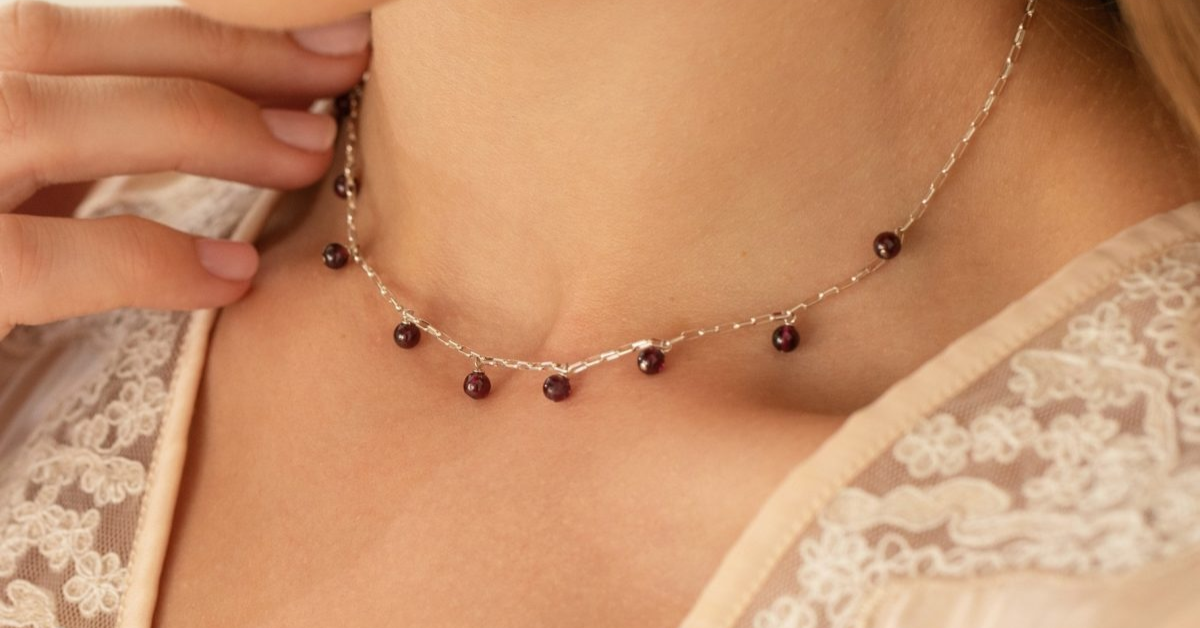
We often associate January with cold, gray skies, but its birthstone is anything but dull. The Garnet is a deep, fiery red gem that symbolizes protection and friendship. Its name comes from the Latin word for “seed,” referencing its resemblance to a pomegranate seed. It is traditionally believed to keep the wearer safe during travel.
February: Amethyst
If you were born in February, your stone is the stunning Amethyst. A member of the quartz family, this gem ranges from pale lilac to deep violet. Ancient Greeks believed amethyst could prevent intoxication—in fact, the word translates to “not drunk.” Today, it is associated with peace, stability, and clarity of mind. A lavender amethyst ring in gold vermeil or silver is a perfect way to wear a pop of this calming color.
March: Aquamarine
Capturing the serenity of the ocean, Aquamarine is the stone for March. Its name literally translates to “water of the sea.” Historically used by sailors for protection, this pale blue gemstone represents courage, loyalty, and lasting youth. Its cool tones look exceptional when set in sterling silver or white gold.
April: Diamond
Those born in April are lucky enough to call the Diamond their birthstone. As the hardest natural substance on earth, diamonds symbolize invincible strength and eternal love. While colorless diamonds are the most popular, they can actually be found in various colors. Because of their durability, they are perfect for everyday wear, such as in stud earrings or solitaire pendants.
May: Emerald
May babies are celebrated with the Emerald, a stone synonymous with rebirth and love. The rich green color reflects the peak of spring. Emeralds were a favorite of Cleopatra and have long been associated with foresight, good fortune, and youth. It is a softer stone than a diamond, so it requires a bit more care, but its vibrant hue is unmatched.
June: Pearl, Alexandrite, and Moonstone
June offers a trio of choices. Pearl is the most traditional, symbolizing purity and innocence. Uniquely, it is the only gemstone created by a living creature. Moonstone is ethereal and dreamy, often linked to new beginnings. Alexandrite is a rare, color-changing gem that shifts from green in daylight to red under incandescent light, often described as “emerald by day, ruby by night.”
July: Ruby
The Ruby is the undisputed king of red gems. Representing passion, wealth, and protection, this stone is incredibly durable and holds its color well. In ancient folklore, it was believed that rubies contained an inner fire that could never be extinguished. It is a bold statement piece for anyone born in July.
August: Peridot
Unlike many gems that form in the Earth’s crust, Peridot is formed deep within the mantle and brought to the surface by volcanic activity. This vibrant, lime-green stone represents strength and protects the wearer from nightmares. It is one of the few gemstones that exists in only one color. Peridot stud earrings add a fresh, earthy brightness to any outfit.
September: Sapphire
While usually associated with a deep, velvet blue, Sapphires actually come in every color except red (because a red sapphire is a ruby). This stone represents wisdom, virtue, and good fortune. For centuries, it has been a favorite of royalty—most famously featured in Princess Diana’s engagement ring.
October: Opal and Tourmaline
October offers two stones with a kaleidoscope of colors. Opal is unique because it diffracts light to display a play-of-color, symbolizing hope and creativity. Tourmaline is a favorite among jewelry designers because it is available in a vast spectrum of colors, from pink to green to black. Pink tourmaline is specifically associated with compassion and gentleness.
November: Topaz and Citrine
Both November stones bring warmth. Citrine is a yellow-to-orange quartz known as the “merchant’s stone” for its association with success and wealth. Topaz comes in many colors, but the golden-orange Imperial Topaz is the traditional choice, symbolizing affection and intellect.
December: Turquoise, Tanzanite, and Zircon
December closes the year with three distinct blue stones. Turquoise is one of the oldest known gems, often found in Native American jewelry and symbolizing protection. Tanzanite is a violet-blue stone found only in Tanzania, discovered relatively recently in the 1960s. Zircon (not to be confused with cubic zirconia) creates intense sparkle and comes in a variety of colors, though blue is the most popular for December.
The Art of Gifting Birthstones
One of the reasons birthstone jewellery remains a bestseller is its gifting potential. It removes the guesswork from buying gifts. When you choose a birthstone piece, you are telling the recipient that you put thought into who they are.
- For New Mothers: “Push presents” or gifts to celebrate a new baby often feature the child’s birthstone. A pendant or a stacking ring with the baby’s gem is a sentimental keepsake.
- Graduations: Marking a significant milestone with a birthstone ring symbolizes good luck for the future.
- Friendship: Matching bracelets with your respective birthstones is a sophisticated, adult take on the childhood friendship bracelet.
Styling Your Gems: Modern Trends
Gone are the days when birthstone jewelry meant chunky, old-fashioned settings. Modern designers are reimagining these gems for the contemporary wardrobe.
Stacking and Layering
You don’t have to wear your birthstone in isolation. A popular trend is stacking rings. You might pair a slim full eternity ring in sterling silver with a solitaire birthstone ring. This adds texture and sparkle.
Mixing Metals
Don’t be afraid to mix your metals. A cool-toned stone like Aquamarine looks crisp in silver, but setting it in yellow gold creates a warm, vintage contrast. Vermeil (silver plated with a thick layer of gold) is an excellent, affordable option that gives you that luxurious gold look.
The “Chosen” Family
You aren’t limited to your own birth month. Many people create a “family story” on their hands or neck by wearing the birthstones of their partner, children, or best friends alongside their own. It creates a colorful, meaningful cluster that keeps your loved ones close.
Caring for Your Jewellery
To keep your birthstone jewellery sparkling for a lifetime, it requires a little attention. While diamonds and rubies are incredibly hard, stones like pearls, opals, and emeralds are softer and more susceptible to damage.
- Cleaning: For most crystalline gemstones, warm water with a mild dish soap and a soft toothbrush works wonders. Avoid harsh chemicals or ultrasonic cleaners for organic gems like pearls or porous stones like turquoise.
- Storage: Store your pieces separately. A diamond ring can easily scratch a softer peridot or amethyst if they are jumbled together in a box. Soft cloth pouches are ideal for keeping them safe.
- Wear: The general rule for jewelry is “last on, first off.” Put your jewelry on after you have applied lotions, perfumes, and hairspray to prevent buildup that dulls the stone’s shine.
Find Your Meaning
Whether you believe in the ancient powers of the stones or simply love the way a specific color complements your skin tone, birthstone jewellery is a timeless investment. It transcends trends because it is anchored in identity.
From the deep protective red of a January Garnet to the cool, successful blue of December’s Tanzanite, there is a stone for every story. Exploring these gems allows you to curate a collection that is not just beautiful to look at, but meaningful to wear.
Stay in touch to get more updates & alerts on Coop Magazine! Thank you