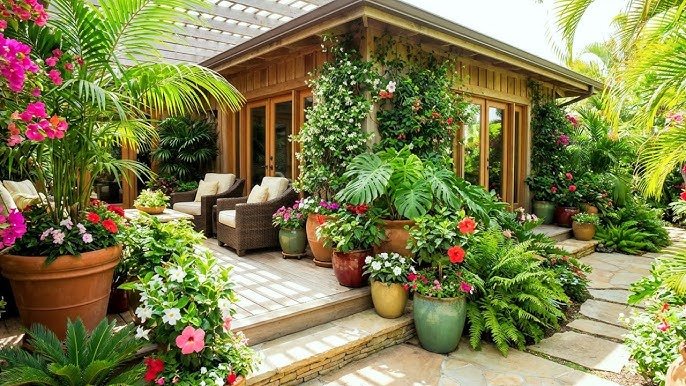
You planned a relaxing Sunday afternoon in your garden. Then, you spent three hours mowing, came inside exhausted, and sat on the sofa questioning your life choices.
Sounds familiar? Don’t worry; we’re here to fix that.
This year’s garden design trends are less focused on impressing the neighbours and more on actually enjoying the space you’ve got. Whether your garden is a generous plot or a patch just big enough to swing a trowel in, there’s something in this list for you.
Sustainable Gardening Practices
It usually starts with a slightly guilty thought. Maybe you’re dragging the hose across your lawn in the middle of a heatwave or replacing yet another plant that didn’t quite survive the season. At some point, you begin to wonder if there’s a better way to do all this.
That’s where sustainable gardening comes in. In 2026, more homeowners are leaning towards native specimens. Plants suited to British conditions don’t need constant watering or a complicated feeding schedule. You place them in the right spot, and they just thrive.
Water-wise design is part of this, too. That can mean swapping out thirsty lawns for gravel or just being a bit more strategic with how you use water.
And the best part is that you’ll also get lower water bills—a satisfying side effect of doing something good for the environment.
Longer Grass
At some point, that perfectly trimmed lawn stopped feeling worth the effort.
You mow it, water it, and for about two days, it looks exactly how you want it to. Then, it grows back, slightly uneven, and the whole cycle starts again. It’s not that people have fallen out of love with lawns; it’s more that they’ve grown tired of maintaining them like a showpiece.
So, longer grass is having a moment. It creates a more relaxed feel, brings a bit of movement into your space, and, conveniently, you don’t have to haul your mower out every weekend.
Some people are taking it a step further with meadow-style patches, letting certain areas grow freely and keeping others more structured. This can give your garden a bit of contrast: tidy where it needs to be, a little more relaxed where it doesn’t.
Multifunctional Spaces
You step outside with a cup of tea, ready to relax, and immediately realise the setup isn’t quite right.
The chair is uncomfortable, the table is in the wrong place, and somehow the whole layout only makes sense if you’re hosting a very specific kind of gathering that rarely happens.
If this sounds familiar, multifunctional design is the trend you should focus on.
Gardens in 2026 are being designed to do more than one job. That might mean having a dining area that doubles as a workspace during the day or seating that can handle both quiet evenings and slightly chaotic weekend get-togethers.
Zoning is a big part of this. Instead of one open, undefined space, divide your garden into areas with clear purposes: a spot to sit, a place to eat, and maybe even somewhere to grow vegetables.
The key is flexibility. So, get furniture that can be moved around, come up with a layout that doesn’t feel rigid, and create a space that adapts to how you actually live, not how you think you’re supposed to.
Vertical Gardening
If you’ve ever looked at your garden and thought, “There just isn’t enough space,” you’re not alone. So, instead of trying to squeeze more in at ground level, people are starting to look up.
Vertical gardening is becoming more popular, particularly in smaller spaces where every bit of room counts.
Walls, fences, and even those awkward corners you’ve been ignoring can be extremely useful. You can use them to grow herbs, add greenery, or bring in a bit of interest without sacrificing the space you actually use day to day.
Also, adding height draws the eye upwards and makes the space seem larger or, at least, more layered and interesting.
In most cases, it doesn’t require anything complicated. Climbing plants, wall-mounted planters, and simple trellises are all you need.
If you’ve struggled to keep things alive at ground level, shifting your focus upwards can also feel like a reset. It’s the same garden, just used in a way that works a bit better.
Smart Tech
You’d think the garden might be the one place safe from technology quietly taking over, but not quite.
It usually starts small. You set up an automatic watering system to save yourself a bit of effort, then add smart lighting so you don’t end up stumbling around the moment it gets dark. The next thing you know, your garden is running more efficiently than ever.
The difference in 2026 is that the tech is less obvious. You don’t need to know about flashy gadgets that turn your garden into a control centre. All you have to do is remove the little inconveniences that tend to add up.
Modern irrigation systems can adjust themselves based on the weather, and there are apps that keep track of what you’ve planted and when, so you don’t have to rely on vague memory.
And perhaps that’s the appeal. Your garden will still feel like a place to switch off; you’ll just be doing a bit less work to keep it that way.
Seasonal Gardens
By this point, you’ve got a sustainable, flexible, beautifully zoned garden with smart tech quietly keeping things ticking along. The final step is making sure it looks good year-round, not just in the six sunny weeks of British summer.
That means thinking beyond what’s in bloom right now and considering how the space will look in autumn, winter, and early spring.
This is where structure starts to matter just as much as colour. Evergreen plants, textured foliage, and a few well-placed features will give your garden something to fall back on when the flowers take a break, so it doesn’t end up looking like it’s given up on life entirely.
It doesn’t need to be complicated. A few small decisions, like choosing plants with staggered flowering times or adding something that keeps its shape through winter, can make a noticeable difference.
Not sure where to start? If you live in the capital, there are plenty of services that specialise in London garden designs and can help you plan for every season.
Conclusion
In the end, these trends are all pointing in the same direction: gardens that fit into your life, rather than ones that feel like a separate project you’re constantly trying to stay on top of.
There’s less pressure to get everything ‘just right’ and more room for things to grow and change. So, pick one thing from this list and take it from there. In just a few weeks, your neighbours will start asking how you pulled it off.