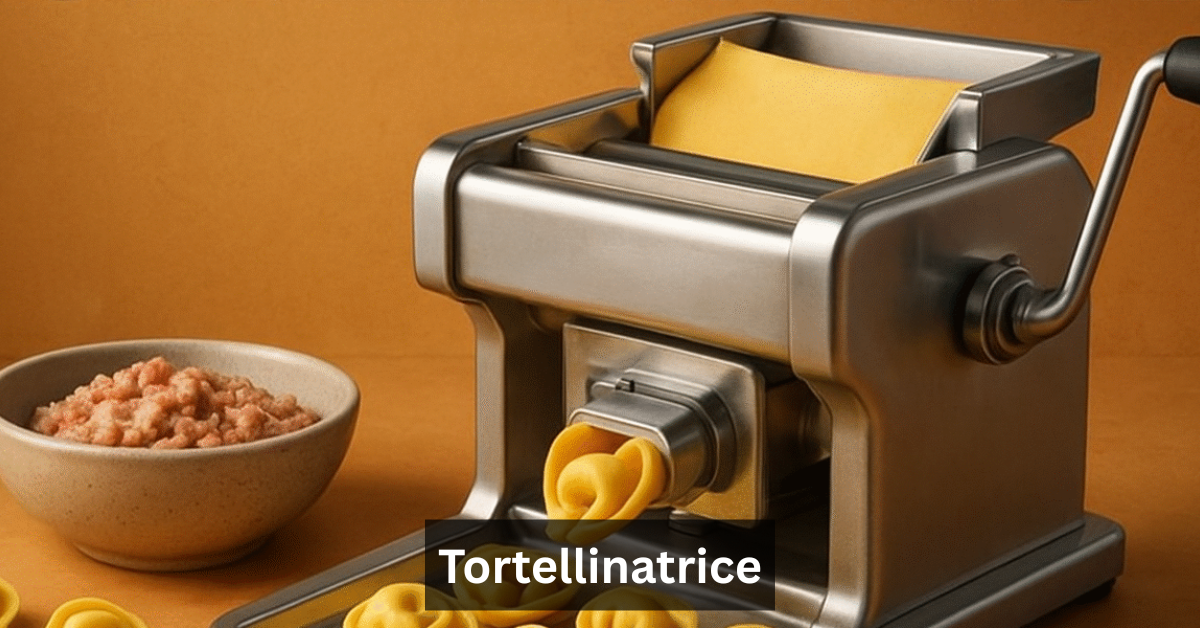
A Tortellinatrice is a specialized pasta machine designed to produce tortellini, automating the process of shaping, filling, and sealing the pasta.This machine is an essential part of modern pasta factories, fresh pasta shops, and professional kitchens where pasta fresca (fresh pasta) remains a culinary star.
A Tortellinatrice allows chefs, pasta makers, and food industries to automate the delicate art of formatura pasta (pasta forming) while keeping the soul of traditional Italian cuisine alive. It is not just machinery; it is the bridge between artigianato alimentare (culinary craftsmanship) and modern automazione alimentare (food automation).
Tortellini has deep roots in the gastronomia italiana (Italian gastronomy), especially in Emilia-Romagna. Bologna and Modena proudly compete for the title of “home of tortellini.” According to legend, tortellini were inspired by the goddess Venus, whose navel served as the model for the pasta’s iconic shape. For centuries, families in Emilia-Romagna carefully prepared sfoglia di pasta (pasta sheets) by hand, filled them with ripieno tradizionale (traditional filling), and folded each tortellino with precision.
As the popularity of tortellini grew, so did the need for larger-scale production. From local trattorias to global pasta brands, the demand could not be met by hand-rolling alone. This is where the Tortellinatrice came in—a revolutionary machine that preserved tradition while offering the speed and consistency necessary for commercial success.
The transition from handmade pasta fatta a mano (handmade pasta) to pasta made with machines was not a loss of tradition but an evolution. The Tortellinatrice, much like the raviolatrice (ravioli-making machine) and gnoccatrice (gnocchi-making machine), allowed Italian cuisine to expand globally while maintaining authenticity. Whether in a laboratorio di pasta fresca (fresh pasta workshop) or in large-scale produzione alimentare industriale (industrial food production), the Tortellinatrice ensures that every bite of tortellini is just as delightful as those folded by nonnas in Emilia centuries ago.
Understanding the Tortellinatrice
What Is a Tortellinatrice and How Does It Work?
A Tortellinatrice is a macchina per tortellini (tortellini-making machine) designed to automate the production of pasta ripiena (stuffed pasta). The process begins with impasto pasta (dough mixture) being rolled into a sfoglia di pasta (pasta sheet). The machine then deposits the ripieno tortellini (tortellini filling) in precise portions before folding and sealing the dough into the signature ring shape.
Depending on the model—Tortellinatrice elettrica, Tortellinatrice automatica, or Tortellinatrice industriale—the machine may be compact for artisanal shops or large and fully automated for industrial pasta equipment.
Main Components of a Tortellinatrice
Every Tortellinatrice shares core components: a dough feeder for pasta sheets, a filling injector for distributing ripieno tradizionale, and forming molds that shape and seal the tortellini. Some advanced models allow adjustments in dough thickness, filling volume, and output speed, ensuring consistency in produzione tortellini automatizzata (automated tortellini production).
Well-known Italian brands like Imperia, Bottene, La Monferrina, Fimar, and Pama Roma specialize in crafting professional Tortellinatrice models that meet both artisanal and industrial needs.
Difference Between Tortellinatrice and Raviolatrice
While a raviolatrice focuses on producing square or round ravioli, the Tortellinatrice specializes in the distinct “belly-button” shape of tortellini. Both machines fall under the category of attrezzatura per pasta ripiena (stuffed pasta equipment), but the Tortellinatrice has a unique mechanism for folding and closing each piece in a way that preserves the authentic Emilian look and taste.
Types of Tortellinatrice Machines
Manual Tortellinatrice
The manual Tortellinatrice is perfect for small-scale pasta shops or fresh pasta enthusiasts who value control over automation. These machines still require operator effort but significantly reduce the time compared to fully hand-making tortellini. They are common in artisanal kitchens and boutique pasta factories.
Electric and Automatic Tortellinatrice
A Tortellinatrice elettrica or Tortellinatrice automatica uses electric motors to handle most of the pasta-forming process. They are highly efficient, compact, and perfect for restaurants and laboratories producing pasta fresca daily. These machines balance speed with artisanal quality, making them a favorite among professional chefs.
Industrial Tortellinatrice for Large-Scale Production
In large pasta production lines, the Tortellinatrice industriale is a game-changer. Fully automated, it can produce thousands of tortellini per hour while maintaining perfect consistency in dough thickness, filling ratio, and sealing. These machines are crucial for global pasta brands supplying supermarkets and export markets.
Professional vs. Home Tortellinatrice Models
While professional Tortellinatrice machines are designed for durability and high capacity, home models are smaller, affordable, and designed for passionate home cooks. Professional models often include modular attachments, allowing flexibility for producing cappelletti, agnolotti, and even ravioli.
Benefits of Using a Tortellinatrice
Efficiency and Speed in Pasta Production
A Tortellinatrice dramatically reduces production time compared to handmade methods. What once took hours can now be done in minutes without sacrificing quality. This efficiency allows both small shops and industrial producers to meet growing demand.
Consistency in Size, Shape, and Filling
One of the greatest strengths of the Tortellinatrice is its ability to deliver uniform tortellini. Each piece has the same amount of dough and ripieno, ensuring an even cooking experience and a flawless presentation on the plate.
Cost-Effectiveness for Restaurants and Factories
Investing in a Tortellinatrice is cost-effective. By reducing manual labor, improving output, and minimizing waste, restaurants and factories achieve better margins. The return on investment is fast, especially for establishments that rely heavily on pasta production.
Preserving Tradition While Embracing Technology
The Tortellinatrice embodies the balance between tradition and modernity. By automating pasta forming, it safeguards cultural heritage while meeting modern food industry standards of hygiene, scalability, and quality.
How to Choose the Right Tortellinatrice
Key Features to Look For (Dough Thickness, Filling Control, Output)
When selecting a Tortellinatrice, the most important features revolve around precision and flexibility. The ability to adjust dough thickness ensures that the sfoglia di pasta matches the desired texture, whether for traditional tortellini from Modena or more delicate cappelletti. Filling control is equally vital; a reliable Tortellinatrice deposits the exact amount of ripieno tortellini every time, reducing waste and guaranteeing balance between dough and filling. Output speed also matters, especially in busy restaurants or factories where automazione alimentare must keep up with high demand.
Another key element to consider is durability. A professional Tortellinatrice should be made from stainless steel or other food-grade materials, easy to clean, and resistant to wear from daily use. Advanced models often allow interchangeable molds, enabling pasta makers to create not only tortellini but also other stuffed pasta types like ravioli or agnolotti without investing in separate machines.
Choosing Between Artisanal and Industrial Models
There is no single Tortellinatrice suitable for everyone. A laboratorio di pasta fresca or small trattoria may prefer a Tortellinatrice artigianale, compact in size but powerful enough to deliver consistent quality for daily service. On the other hand, pasta factories or large-scale producers need a Tortellinatrice industriale, capable of integrating into a full pasta production line with automated dough mixers, sheet rollers, and packaging equipment.
Artisanal models often prioritize flexibility, giving chefs control over fillings, dough types, and shapes. Industrial models prioritize speed and uniformity, making them ideal for supermarket supply chains. Both options share the same purpose: to ensure that the iconic taste of Emilia-Romagna’s pasta remains intact, whether served at a family table or exported globally.
Price Ranges and What to Expect
The cost of a Tortellinatrice varies greatly depending on capacity, automation level, and brand. A manual or small electric model can start at a few hundred euros, making it affordable for fresh pasta shops or restaurants. Mid-range professional machines often cost several thousand euros, offering reliability and the ability to handle heavier production.
At the top of the scale, a Tortellinatrice industriale designed for a pasta factory can reach tens of thousands of euros. These investments, however, quickly pay off by reducing labor costs, ensuring consistent production, and meeting industrial hygiene standards. For businesses where pasta is central, such machines are not an expense but a long-term asset.
Best Tortellinatrice Brands on the Market
Italy is home to some of the world’s best pasta machine manufacturers. Imperia is famous for its durable, user-friendly models perfect for smaller businesses. Bottene and La Monferrina specialize in artisanal and semi-industrial machines, balancing craftsmanship with technology. For high-capacity production, Fimar and Pama Roma deliver robust Tortellinatrice machines designed to handle continuous pasta forming in demanding factory environments.
These brands are recognized globally for their expertise in macchinari alimentari (food machinery) and continue to innovate, keeping the spirit of pasta fatta a mano alive while introducing modern engineering to cucina italiana.
The Role of Tortellinatrice in Italian Cuisine
Emilia-Romagna’s Pasta Tradition
The Emilia-Romagna region is the beating heart of Italy’s pasta culture, where sfoglia tirata a mano is more than food—it is heritage. Bologna and Modena are especially known for their tortellini, served in rich broths or with creamy sauces. A Tortellinatrice ensures that this tradition reaches beyond local borders. By allowing mass production without losing authenticity, the machine keeps Italian gastronomy accessible to both local restaurants and global food markets.
The Tortellinatrice is a guardian of regional identity. By replicating the precise folds and filling ratios passed down for generations, it keeps alive the flavors of tradizione emiliana while adapting to modern production needs.
Popular Dishes Made with Tortellini
Tortellini crafted by a Tortellinatrice can be enjoyed in countless traditional dishes. The most iconic is tortellini in brodo, a comforting soup featuring delicate pasta floating in clear broth. In Bologna, creamy tortellini alla panna remains a favorite, while Modena celebrates variations filled with prosciutto, mortadella, or Parmigiano Reggiano.
Beyond tortellini, the same machine technology can be adapted for cappelletti, agnolotti, and other stuffed pasta. Restaurants and fresh pasta shops use the Tortellinatrice to keep up with demand for these beloved dishes while ensuring every piece carries the authentic taste of cucina italiana.
How Tortellinatrice Machines Support Local Gastronomy
Local pasta shops and restaurants rely on a Tortellinatrice to maintain daily production. In a typical laboratorio di pasta fresca, fresh sheets of pasta are rolled, filled, and formed into tortellini using this machine. Customers receive the same artisanal taste without waiting hours for manual preparation.
For Italian gastronomy as a whole, the Tortellinatrice makes it possible to spread authentic flavors worldwide. Exported pasta products, made with the help of these machines, carry the essence of Emilia-Romagna into kitchens across Europe, America, and Asia.
Tortellinatrice in Modern Food Industry
Automation in Pasta Production Lines
Modern pasta factories depend on automation to deliver large quantities without compromising on quality. A Tortellinatrice integrates seamlessly into a pasta production line, working alongside dough mixers, rolling machines, and packaging systems. This synergy enables continuous production, reducing downtime and ensuring efficient automazione alimentare.
Automation also ensures compliance with industrial hygiene standards. Machines like the Tortellinatrice industriale are designed for easy cleaning, minimal manual handling, and high-speed production, all of which meet the strict demands of produzione alimentare industriale.
Use in Restaurants, Pasta Shops, and Factories
Restaurants that specialize in pasta fresca use smaller Tortellinatrice models to maintain speed during peak hours while keeping flavors authentic. Fresh pasta shops rely on these machines daily to produce both tortellini and related pasta types for retail sale. Factories, on the other hand, deploy industrial versions capable of feeding global markets.
In all cases, the Tortellinatrice serves the same purpose: to deliver pasta ripiena at its best, whether for a bowl of tortellini in brodo at a trattoria or a packaged tray of pasta for supermarket shelves.
Innovation in Pasta Machinery Technology
Innovation continues to transform the Tortellinatrice. Today’s models include advanced filling systems, adjustable molds, and even digital interfaces for precise control. Some machines are connected to smart factory systems, allowing real-time monitoring of output, efficiency, and maintenance needs.
Brands like La Monferrina and Bottene are at the forefront of blending artisanal expertise with cutting-edge engineering, ensuring that the next generation of Tortellinatrice models will be even more efficient, sustainable, and versatile.
Maintenance and Care of Tortellinatrice
Cleaning and Hygiene Tips
A Tortellinatrice is a precision machine, and keeping it clean is essential for both performance and food safety. After every production cycle, the machine should be carefully disassembled and cleaned with warm water and food-safe solutions. Since pasta dough and ripieno tradizionale can leave residues, it is vital to remove every trace to prevent contamination. Stainless-steel models make this process easier because they resist corrosion and are designed for hygiene.
For professional environments such as fresh pasta shops or industrial factories, cleaning schedules are often regulated by strict health standards. Investing time in hygiene not only extends the lifespan of a Tortellinatrice but also guarantees that every batch of pasta fresca meets the high expectations of customers.
Common Problems and Troubleshooting
Even the most advanced Tortellinatrice can face challenges. Common issues include uneven dough sheets, inconsistent filling portions, or improper sealing of tortellini. Most of these problems are caused by dough that is too wet or too dry, or by fillings with the wrong texture. Adjusting the impasto pasta and ensuring the right moisture balance usually resolves these issues.
Mechanical wear can also affect forming molds and filling injectors. Regular inspection and timely replacement of worn parts ensure that the machine continues to deliver perfect tortellini. Professional brands like Imperia and La Monferrina provide spare parts and support, making troubleshooting manageable for both artisanal and industrial users.
Extending the Lifespan of Your Machine
A Tortellinatrice can last decades with proper care. Routine maintenance—oiling moving parts, checking electrical connections, and calibrating filling nozzles—helps avoid breakdowns. Many professional kitchens keep maintenance logs to track machine performance.
The investment in a Tortellinatrice pays back over time, especially if businesses prioritize care and cleaning. By treating the machine as a partner in pasta-making rather than just a tool, its lifespan is extended, and production quality remains consistently high.
Alternatives and Related Machines
Raviolatrice (Ravioli Machine)
The raviolatrice is the closest cousin of the Tortellinatrice. While the Tortellinatrice produces the iconic ring-shaped tortellini, the raviolatrice focuses on square or round ravioli. Both machines fall under attrezzatura per pasta ripiena and are often used together in pasta factories to diversify production. A restaurant that invests in both can offer customers a full range of pasta ripiena without compromising on speed or quality.
Gnoccatrice (Gnocchi Machine)
Another important alternative is the gnoccatrice, a machine that shapes gnocchi from potato dough or other variations. While it does not handle fillings like the Tortellinatrice, it plays an equally vital role in cucina italiana by ensuring gnocchi are uniform and fluffy. For pasta shops aiming to expand their menu, adding a gnoccatrice alongside a Tortellinatrice makes perfect sense.
Lasagna Sheet Makers and Other Pasta Equipment
Beyond stuffed pasta, Italian cuisine also relies heavily on lasagne. Machines designed to roll large, even sheets of pasta—similar to the dough-rolling section of a Tortellinatrice—are essential for lasagna and other layered pasta dishes. Professional kitchens often use a combination of pasta sheet makers, Tortellinatrice, and raviolatrice to cover the full spectrum of Italian pasta production.
Future of Pasta-Making Machines
Sustainability in Pasta Production
The future of pasta machinery, including the Tortellinatrice, is increasingly tied to sustainability. Manufacturers are designing machines that consume less energy, reduce waste, and optimize ingredient use. With growing consumer demand for environmentally responsible food, pasta factories are embracing greener production methods while still preserving authentic flavors.
Smart Kitchen Technology and AI in Food Machinery
Cutting-edge innovation is transforming the Tortellinatrice into a smart machine. Some industrial pasta equipment already integrates AI-driven systems to monitor dough consistency, filling density, and output. These intelligent machines self-adjust in real time, ensuring every tortellino matches the standards of tradizione emiliana.
In the future, restaurants and pasta factories may see Tortellinatrice models connected to digital apps, offering insights on maintenance schedules, production rates, and recipe adjustments. This evolution promises even more efficiency and quality control in pasta production.
Preserving Culinary Heritage in a Modern Age
Despite technological advances, the Tortellinatrice remains a symbol of balance between old and new. It allows modern industries to meet global demand without losing the cultural identity of Emilia-Romagna. By replicating sfoglia tirata a mano and ripieno tradizionale at scale, the Tortellinatrice ensures that the essence of cucina italiana lives on in every bite.
Conclusion
The Tortellinatrice is more than a machine—it is a cultural ambassador. It takes the centuries-old art of tortellini-making from Bologna and Modena and makes it accessible worldwide. From artisanal pasta shops to industrial pasta factories, the Tortellinatrice allows businesses to maintain authenticity while meeting the demands of modern life.
In an era where time, consistency, and efficiency matter, this machine represents the perfect blend of technology and tradition. Its presence in the food industry guarantees that pasta fresca remains a beloved staple on dinner tables around the globe.
At its core, the Tortellinatrice is a celebration of Italian ingenuity. By honoring heritage while embracing innovation, it ensures that each tortellino carries the story of Emilia-Romagna to future generations. Whether in a steaming bowl of tortellini in brodo or a plate of creamy tortellini alla panna, the machine behind the scenes is quietly shaping the future of cucina italiana.
Frequently Asked Questions
Can a Tortellinatrice make other types of pasta?
Yes, many professional Tortellinatrice models come with interchangeable molds, allowing the production of ravioli, cappelletti, and even agnolotti.
What is the difference between a Tortellinatrice and a raviolatrice?
A raviolatrice makes ravioli, usually square or round, while a Tortellinatrice focuses on the iconic ring-shaped tortellini.
How much does a Tortellinatrice cost?
Prices range from a few hundred euros for small manual or electric models to tens of thousands for industrial Tortellinatrice machines used in pasta factories.
Do professional restaurants use Tortellinatrice machines?
Yes, many restaurants and fresh pasta shops use compact Tortellinatrice models to speed up production while maintaining artisanal quality.
Stay in touch to get more updates & alerts on Coop Magazine! Thank you