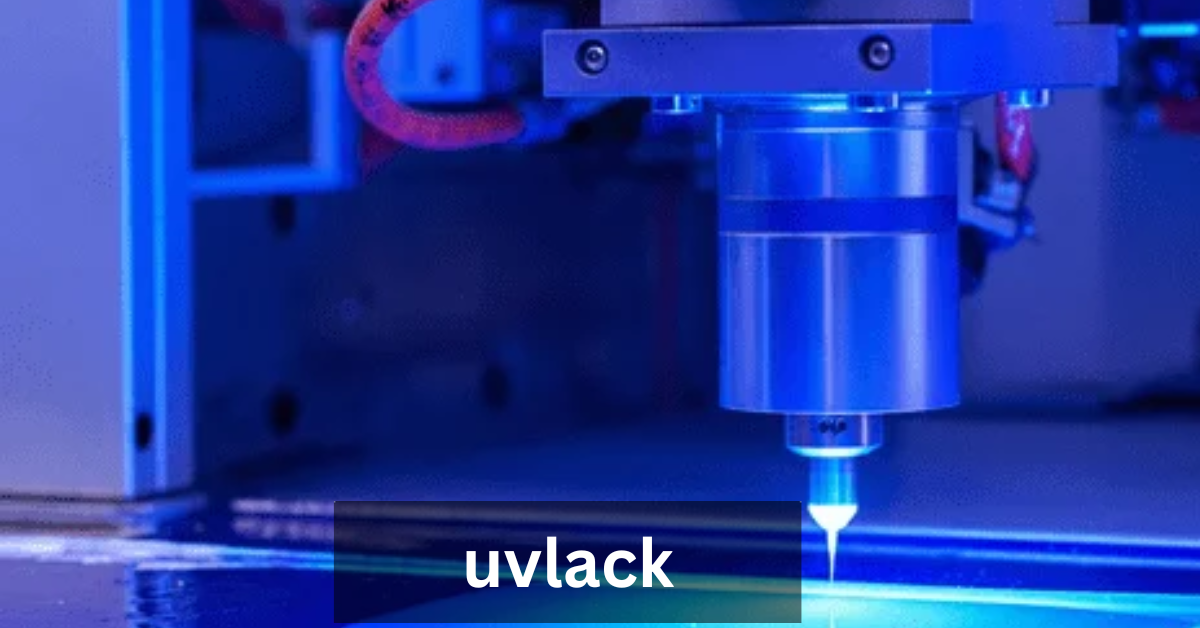
UVlack is a cutting-edge UV-curable lacquer that has revolutionized surface finishing across industries. Essentially, it is a liquid coating that hardens instantly when exposed to ultraviolet (UV) light, creating a robust protective layer. The term “uvlack” combines “UV” (ultraviolet) with the German word “Lack,” meaning lacquer or varnish. Unlike traditional coatings, which require hours or even days to dry, uvlack utilizes the photopolymerization process to cure in mere seconds, drastically increasing production efficiency.
At the heart of UVlack is a crosslinked polymer network formed by specialized urethanes, acrylate resins, and photoinitiators. This network provides exceptional abrasion resistance, chemical resistance, and high-gloss retention, making it a preferred solution for industries demanding both aesthetics and durability.
Modern manufacturing prioritizes speed, precision, and sustainability. UVlack addresses all three. Its rapid surface curing enables high-throughput production lines, while low or zero VOC emissions align with environmental standards and eco-conscious manufacturing practices. Additionally, the versatility of UVlack allows for customizable finishes, from glossy, matte, to satin textures, enhancing the visual appeal of products without compromising protection.
Industries increasingly adopt UVlack due to its energy-efficient curing process, especially with the integration of UV LED curing systems, which consume less power and provide consistent results compared to traditional mercury lamps.
RELATED: MyHarness: Task, Habit, and Goal Tracker Simplified
UVlack’s adaptability makes it suitable for diverse sectors:
- Wood finishing: furniture, flooring, and cabinetry
- Automotive: interior trims and decorative panels
- Packaging and printing: cartons, labels, and high-end product packaging
- Consumer electronics: device casings and panels
- Industrial applications: metal, composites, aerospace, and marine coatings
These applications demonstrate UVlack’s versatility, durability, and aesthetic superiority, positioning it as a leading solution in surface protection.
2. Understanding UVlack Technology
The Science Behind UV-Curable Lacquers
UVlack technology is grounded in UV curing, a process where liquid coatings transform into solid films via exposure to ultraviolet light. Unlike conventional drying, which relies on solvent evaporation, UV curing uses photopolymerization. Photoinitiators within the coating absorb UV photons and trigger a chemical reaction that forms a crosslinked polymer network, instantly solidifying the surface.
This mechanism results in high-durability protective films, with improved abrasion resistance, chemical stability, and adhesion to various substrates. The process is also highly controllable, allowing precise adjustment of coating thickness and surface finish.
Photopolymerization and Photoinitiators
Photopolymerization is the core process enabling UVlack curing. Photoinitiators are chemical compounds that respond to UV light, producing free radicals that initiate polymer chain reactions. These reactions convert oligomers and monomers in the lacquer into a durable urethane-acrylate polymer network.
The selection of photoinitiators affects the speed of cure, depth of penetration, and final mechanical properties. Advanced formulations use combinations of UV-sensitive photoinitiators to optimize performance across different substrates and application conditions.
How UV Light Cures UVlack Coatings
UV light, whether from UV LED systems or mercury vapor lamps, provides the energy needed to activate photoinitiators. LED-based curing offers longer operational life, reduced heat, and energy efficiency, while mercury lamps provide deep penetration suitable for thicker coatings. Excimer UV curing is another innovation, offering precision curing for delicate or complex surfaces.
Upon exposure, the lacquer rapidly polymerizes, forming a smooth, durable film that protects against scratches, chemicals, and environmental stressors. The result is a premium finish ideal for demanding industrial applications.
3. Key Components of UVlack
Resin Types: Urethane Acrylates and Acrylate Oligomers
UVlack formulations rely on high-performance resins. Urethane acrylates provide flexibility and chemical resistance, while acrylate oligomers contribute to hardness and surface durability. The right balance of these components ensures a coating that is both resilient and aesthetically pleasing.
Additives and Flow Agents
Additives, such as flow agents and leveling compounds, improve application consistency and surface smoothness. These components prevent defects like orange peel or streaking, ensuring a flawless uvlack finish across all substrates.
Pigments and Effect Modifiers
Pigments and effect modifiers allow for customized visual effects, including metallic sheen, pearlescent finishes, or UV-stable color retention. Nanoparticles like TiO₂, silica, and ZnO enhance mechanical strength, UV resistance, and chemical protection, extending the longevity of the coating.
Adhesion Promoters
Adhesion promoters enhance substrate bonding, ensuring the uvlack coating remains firmly attached to wood, metal, plastics, or composite surfaces. This improves scratch resistance and prevents delamination under stress, making UVlack suitable for industrial and high-performance applications.
4. Types of UVlack Formulations
100% Solids UVlack
These formulations contain no solvents, providing maximum film build and minimal VOC emissions. Ideal for industrial finishes and wood furniture, they cure rapidly and deliver high-gloss, durable surfaces.
Waterborne UVlacquer
Waterborne UVlack combines environmental friendliness with efficient curing, offering low odor and reduced VOC emissions. This formulation suits eco-conscious manufacturers seeking compliance with sustainability standards.
LED-UV Optimized Coatings
LED-UV coatings are engineered for high-efficiency UV LED systems, offering lower energy consumption and precise curing. These formulations are perfect for electronics and packaging applications, where heat-sensitive substrates must be protected.
Dual-Cure Systems
Dual-cure UVlack systems combine UV curing with thermal or chemical secondary curing, ensuring complete hardening even in shadowed areas. These systems are essential for complex geometries or thick coatings where UV light penetration may be limited.
5. Advantages of Using UVlack
Instant Curing and Rapid Production
UVlack’s most celebrated advantage is speed. Curing occurs within seconds, enabling high-throughput production lines and reducing downtime. This efficiency translates to cost savings and faster product turnaround, vital for modern manufacturing demands.
High Durability and Scratch Resistance
The crosslinked polymer network provides exceptional scratch and abrasion resistance, making UVlack ideal for furniture, automotive trims, and consumer electronics. Products maintain their visual appeal and structural integrity for longer periods.
Chemical Resistance and Substrate Protection
UVlack coatings are resistant to chemicals, moisture, and environmental stressors, protecting wood, metal, plastics, and composites. This enhanced substrate protection reduces maintenance costs and prolongs product life.
Eco-Friendly and Low-VOC Benefits
Many UVlack formulations offer low or zero VOC emissions, aligning with environmental standards and sustainable manufacturing goals. Energy-efficient UV LED curing systems further reduce the carbon footprint.
Gloss, Matte, and Satin Finish Options
UVlack provides versatile finishing options, from high-gloss reflective surfaces to soft matte textures, accommodating design aesthetics across industries.
6. UVlack vs Traditional Coatings
Differences in Curing Methods
Traditional coatings rely on solvent evaporation or heat curing, taking hours to days. In contrast, UVlack cures instantly under UV light, offering dramatically faster production.
Performance Comparison
UVlack outperforms conventional varnishes in durability, chemical resistance, and adhesion. The crosslinked polymer structure ensures long-term protection, unlike solvent-based coatings, which may yellow, crack, or degrade over time.
Cost-Effectiveness and Production Efficiency
While UVlack equipment may require initial investment, its rapid curing and reduced waste lead to lower long-term production costs. Efficiency gains are significant in high-volume manufacturing.
Environmental Impact
UVlack reduces VOC emissions, minimizes solvent use, and enables eco-friendly production, offering clear advantages over traditional coating methods in sustainability.
7. Applications of UVlack
Wood and Furniture Finishing
UVlack is widely used on tables, cabinets, and flooring, providing scratch-resistant, chemical-resistant, and visually appealing finishes. Its rapid curing allows for high-volume production without compromising quality.
Automotive Industry
Interior trims, dashboards, and decorative panels benefit from UVlack’s durability and aesthetic versatility. UV-curable coatings withstand daily wear, cleaning chemicals, and temperature fluctuations, ensuring longevity.
Packaging and Printing
Cartons, labels, and high-quality packaging use UVlack for enhanced visual appeal and surface protection. Rapid curing supports fast-moving production lines, maintaining product integrity.
Electronics and Consumer Devices
Device casings and panels receive smooth, durable coatings through UVlack, offering scratch resistance, chemical protection, and high-gloss finishes. LED-UV formulations protect heat-sensitive components.
Industrial and Architectural Surfaces
Metal, composite panels, aerospace components, and marine surfaces are coated with UVlack to achieve long-term protection against environmental stress, abrasion, and corrosion.
8. The UVlack Process
Surface Preparation
Effective uvlack application requires cleaning, priming, and pretreatment. Techniques like corona or plasma treatment enhance adhesion, ensuring the coating bonds securely to the substrate.
Application Techniques
Common methods include spraying, roller coating, and dip-coating, each suitable for different substrates and surface complexities. Proper application ensures even coverage and defect-free finishes.
UV Curing Systems
UV curing may use LED-UV lamps or mercury vapor lamps. LED systems offer energy efficiency and consistent curing, while mercury lamps provide deep penetration for thicker coatings.
Quality Control and Inspection
Finished surfaces undergo inspection for gloss, adhesion, and thickness, guaranteeing premium quality and long-lasting protection.
9. Challenges and Limitations
Under-Cure and Uneven Coating
Complex geometries or thick layers may experience incomplete curing, requiring dual-cure systems or adjusted UV exposure.
Equipment Investment and Maintenance
UVlack requires specialized curing systems, which involve initial costs and periodic maintenance.
Sensitivity to Substrate and Thickness
Different substrates may require adhesion promoters or primers, and coating thickness must be controlled to avoid defects.
Health and Safety Considerations
Although UVlack reduces VOCs, operators must use protective equipment to avoid UV exposure or chemical contact.
10. Future Trends in UVlack Technology
Nanotechnology-Enhanced Coatings
Incorporating nanoparticles like TiO₂ or ZnO improves mechanical properties, UV resistance, and chemical durability, pushing UVlack to new levels of performance.
Self-Healing and Smart UVlack Systems
Emerging self-healing formulations allow minor scratches to repair automatically, enhancing long-term surface aesthetics.
Expansion of LED-UV Curing Adoption
LED-UV systems are expected to replace mercury lamps in most industries due to energy efficiency, longer lamp life, and eco-friendliness.
Sustainability and Eco-Conscious Formulations
Focus on low VOC, waterborne formulations and energy-efficient curing aligns UVlack with global sustainability initiatives.
RELATED: Novapg: The Ultimate AI-Powered Platform
Frequently Asked Questions
How Fast Does UVlack Cure?
UVlack cures within seconds under UV light, enabling rapid production and reducing downtime.
Can UVlack Be Used on All Surfaces?
UVlack is versatile but may require surface preparation such as priming, plasma, or corona treatment for optimal adhesion.
What Makes UVlack Eco-Friendly?
UVlack formulations often contain low or zero VOCs, reduce solvent use, and utilize energy-efficient UV LED curing systems.
How Does UVlack Compare with Traditional Varnishes?
Compared to traditional coatings, UVlack offers faster curing, higher durability, chemical resistance, and lower environmental impact.
Summary
UVlack represents a modern, high-performance solution for industrial and commercial surface finishing. Its combination of rapid curing, durability, chemical resistance, and eco-friendliness makes it a preferred choice across wood, automotive, packaging, electronics, and industrial applications.
As UV curing technology advances, UVlack continues to evolve with nanotechnology enhancements, self-healing properties, and LED-UV integration, ensuring it remains at the forefront of surface protection solutions. Businesses adopting UVlack benefit from faster production, superior finishes, and sustainable processes, positioning them competitively in a fast-paced, quality-driven market.